Related Articles

In a striking announcement, President Yoweri Museveni has issued a stern directive, banning the practice of caning civilians by police and army officers in Uganda. This bold statement was made in his end-of-year address, where he emphasized the need to abandon outdated and inhumane methods of crowd control. The move comes in the wake of growing concerns over the excessive use of force by security forces, especially during politically sensitive times, such as election campaigns.
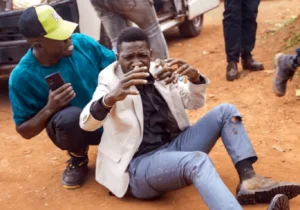
The president made it clear that he rejected the practice of caning lawbreakers, drawing attention to the global context where some police forces use batons for crowd control. However, Museveni firmly stated that this approach should not be part of Uganda’s law enforcement methods. “Some police forces around the world do it using batons,” he said, “but I, however, reject it. It must stop.” This firm stance is a significant shift from previous years, where the use of force, including caning, was often justified as a means of enforcing discipline.
Museveni’s comments also reflected a broader critique of authoritarian practices. He noted that in the past, teachers and parents used to cane children, but that this too was a misguided approach. The president’s statement acknowledged that such methods are wrong and should not be adopted by law enforcement agencies. His decision to take a stand against this form of punishment signals a shift toward more modern and humane approaches in law enforcement.
The ban on caning, however, comes with a proposed alternative. Instead of using physical force, Museveni advised the police to rely on teargas, which he described as a legal and non-lethal method of crowd control. While teargas is still controversial and can have serious side effects, it is seen as a less harmful method compared to physical beatings. Museveni’s emphasis on teargas, water cannons, and other non-lethal techniques reflects a desire to modernize the country’s crowd control strategies.
Nevertheless, Museveni warned that even non-lethal techniques must be used with caution. He advised the police to be more methodical in their approach when deploying teargas, water cannons, or other non-lethal methods. This should include using loudspeakers to issue clear warnings and give people time to disperse. Such a procedure would ensure that civilians are given a chance to respond to the authorities’ commands before the situation escalates further.
The timing of this announcement is significant. Uganda is currently in the midst of the 2026 election campaigns, which have been marred by violence and heavy-handed tactics by security forces. There have been several reports of police and army officers using force to disperse political rallies and demonstrations. In particular, the National Unity Platform (NUP) candidate, Robert Kyagulanyi, also known as Bobi Wine, has faced numerous incidents where security personnel used teargas and even physical force against his supporters.
This ongoing use of force has sparked public outcry, with critics accusing the government of attempting to suppress opposition voices. In particular, the security forces’ actions have disrupted local commerce and heightened tensions within campaign venues. Observers argue that such tactics only serve to alienate the public and fuel unrest, rather than bring about peace and order.

The human rights community has also voiced serious concerns about the rising levels of violence in Uganda’s election campaigns. UN human rights officials have warned that the crackdown on opposition supporters and the media could have dire consequences for Uganda’s democratic process. The repression of opposition voices, they argue, poses a direct threat to the fundamental freedoms of expression and assembly.
Historically, allegations of police and military brutality have been common during Uganda’s election periods. Human rights organizations have long documented incidents where security forces beat, detained, and used excessive force against protesters, journalists, and opposition members. These abuses have often been justified by the authorities as necessary to maintain law and order, but critics argue that they are simply tools of political control.
The use of force during election times has been seen as a tactic by the ruling government to intimidate and suppress opposition groups. For many Ugandans, the memory of past electoral violence is still fresh, and they fear that the 2026 elections will be no different. Despite these fears, President Museveni’s recent orders offer a glimmer of hope for those advocating for greater political freedom and respect for human rights in Uganda.
However, while Museveni’s ban on caning is a step in the right direction, the challenge remains in ensuring that the new directives are properly enforced. Uganda’s security forces are known for their strong military presence and often operate with a sense of impunity, especially when dealing with opposition supporters. The real test will be whether these orders are implemented effectively, or if old habits of using force persist.
Museveni’s change of heart is also seen as part of a broader effort to improve Uganda’s image internationally. In recent years, the country has faced growing criticism from international bodies, including the United Nations and human rights organizations, for its treatment of opposition groups and media personnel. By taking a stand against violent methods of crowd control, Museveni may be trying to ease international pressure and improve Uganda’s standing on the global stage.
Despite the president’s directive, many Ugandans remain skeptical about the government’s commitment to real change. In a country where political repression has been the norm, there is a deep sense of mistrust toward the authorities. Critics argue that while the ban on caning is a positive move, it does not address the broader issue of political repression, where security forces continue to intimidate and harass those opposed to the government.
Additionally, there are concerns about the practicality of relying on teargas and other non-lethal methods for crowd control. While these measures may be less harmful than caning, they can still have serious consequences for public health. Teargas, for instance, can cause respiratory problems and exacerbate existing health conditions. The use of such methods also raises questions about the appropriate balance between maintaining order and protecting human rights.
As the country prepares for the 2026 general elections, all eyes will be on how security forces adapt to the new directives. Will they follow the president’s orders and implement more humane methods of crowd control, or will they continue with the violent tactics that have characterized previous elections? Only time will tell whether Museveni’s orders signal a genuine shift in the government’s approach to law enforcement or if they are simply another attempt to placate critics without making substantial changes.
In the meantime, the citizens of Uganda are left to navigate a political landscape that is still fraught with violence, tension, and uncertainty. While Museveni’s directive may mark a turning point, the road to a more democratic and peaceful Uganda is still long and uncertain.

For many, the hope is that this change in policy is the beginning of a broader movement toward respecting human rights, restoring trust in government, and ensuring a more just and inclusive society.
The coming months will likely determine whether this ban on caning will be remembered as a genuine reform or just another political gesture in Uganda’s ongoing struggle for democracy and justice.
Despite the optimism surrounding Museveni’s new directives, there is a concern that the real test will be in the consistency of their application. Many Ugandans remember promises made in the past that were either delayed or watered down when the political climate became tense.
While the president’s words are clear, the true impact will depend on how thoroughly these orders are enforced on the ground. The police and army, which have long been accustomed to using force, may need further training and accountability measures to ensure that these new methods are properly applied during high-pressure moments like elections.
Moreover, critics point out that the ban on caning alone will not solve the deeper issues within Uganda’s security apparatus. They argue that systemic problems, including political bias, lack of transparency, and impunity within the security forces, still need to be addressed if there is to be any lasting improvement in the country’s approach to law enforcement.
Without broader reforms aimed at curbing corruption, strengthening the rule of law, and ensuring police accountability, there is a risk that this directive could be just a surface-level change that does little to alter the underlying dynamics of state violence.
As Uganda enters the final stretch of its electoral cycle, civil society organizations, political analysts, and international observers will be keeping a close watch on whether the government upholds this promise. There is an opportunity for Uganda to set a precedent for human rights and political freedom in Africa, but this will require genuine commitment from the state to protect its citizens, respect their rights, and ensure that law enforcement agencies serve as protectors of peace rather than enforcers of political power. The road ahead remains uncertain, but this policy shift could be a critical step toward restoring faith in the country’s democratic processes.