Related Articles

BY RICHARD DRASIMAKU
ARUA: TUESDAY, JULY 07, 2026
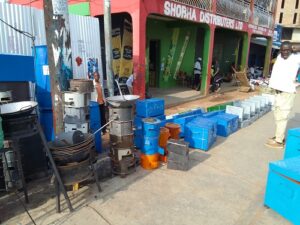
At a road side of the Go-down road in the centre of the bustling Arua City, the crackling of metals is a constant occurrence, reverberating to fill the airwaves.
As the young men harmer to shape metals into different products, the women are busy painting the shaped metals into glittering final products.
These are members of the Tongilo Gaagaa Youth Association who specialty is metal fabrication to make products such as boxes, cooking stoves, hand washing containers among others.
The group of six men and four women was a beneficiary of the Youth Livelihood Program (YLP) where in 2024, they received sh10m from the government.
Fred Afeku, the group secretary said they spent sh6.5m to stock the raw material comprising new stuff like MS plates and old metal scraps. They also bought additional tools such as hammers, scissors among others.
But they also kept the sh3.5m in their bank account to cover emergencies that could arise from unforeseen circumstances.
Since them, the Tongilo youth association has refunded sh1m to the project recovery account and is scheduled to reimburse another sh2m in the coming days.
Their major challenge is the seasonality of business where for instance things like boxes have good demand when students are returning to school at the beginning of the term after which products remain decorating the roadside.
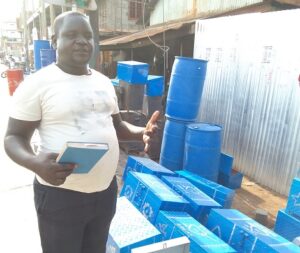
Tongilo is one of the ten YLP groups who have begun recovering funds that were seeded to capitalize their business.
According to Jimmy Droma, the assistant Town Clerk in charge of YLP and the Uganda Women Entrepreneurship Program (UWEP), only ten groups out of the 330 that were funded in Arua City under YLP have begun recovery of funds.
The government has invested a total of sh2,736,396,000 in YLP in Arua City since 2014/2015 Financial year and sh447,227,636 to 75 groups under UWEP. The total amount of funds given to Arua city under both programmes is Sh3,183,624,636 for 405 women and youth groups.
Due to the very low recovery rate, the Central government has suspended payment of further project financing to Arua City.
However, the officials have been directed to intensify efforts to recover the funds in the next one to two months in order to reinstate the financing of new projects.
Meanwhile the government has allowed refinancing of groups who have demonstrated good practice by recovering the funds and maintaining the projects that they started.
John Engabi, the Coordinator of UWEP and YLP in Northern I region which comprises Kiboga, Luweero, Kyankwanzi, and West Nile excluding Moyo, Obongi and Adjumani, said implored the members of the youth and women councils to play key role in recovering the funds.
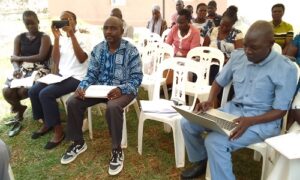
Arua city has about 4,800 beneficiaries under both programs but city officials openly admitted that they do not know where some of the projects are located.
This is because whereas the projects are listed in the records books, there is nothing on the ground to show as evidence of existence.
Some of the community project officials or group members reportedly shared the money among themselves and mishandled it.
Those must be traced and forced to repay so that other people can be funded to support their businesses, Engabi said.
He tasked the City officials to trace and establish location of the groups funded, saying that there had been an elaborate procedure for selection which involved people from the city, the district and the sub counties and Divisions.
Engabi informed the gathering that signatories for every group included the Sub County chief, the sub accountant and the group chairperson, making it impossible for anyone to withdraw money from group accounts without the knowledge of a responsible government officer.
Successful recovery of the funds will see the government lifting the suspension and resuming funding to more youth and women groups but failure to recover the funds- officials have threatened to arrest culprits.
The UWEP and YLP are two flagship affirmative action programs of the government specifically targeting women and youths with the aim of improving household incomes through provision of financial seed capital for local investment.
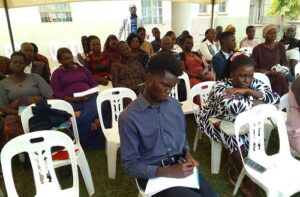
Job Richard Matua, the Arua City Assistance Resident commissioner, commended the government for funding the programs and advised the women and young people to take full advantage of the City’s location within the proximity to the Democratic Republic of Congo where pre-Ebola epidemic business was bristling.
Matua urged the groups to invest in highly demanded produce such as tomatoes and other horticultural crops whose deficit in production has been compensated by supply from central Uganda and yet these produce have high demand in DR Congo.
He explained that the dual programs fit well within the confines of the governments socio-economic transformation agenda where in the new five-year term, the government want to every Ugandan to move away from subsistence economy to money economy and propel the country into the upper middle income status.
