Related Articles


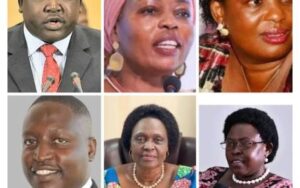
Uganda’s 2026 general elections have sent shockwaves across the country after ten serving cabinet ministers were badly defeated in parliamentary races. The results marked one of the most dramatic political moments in recent history and clearly showed a shift in voter mood.
Across many regions, Ugandans used their votes to express frustration with long-serving leaders. The defeats reflected growing anger over economic hardship, unemployment, poor service delivery, and unfulfilled campaign promises.
One of the most surprising losses was that of Beatrice Anywar, the Minister of Water and Environment. She lost the Kitgum Municipality seat to opposition candidate Dennis Onekalit Amere, ending her long political journey in Parliament.
Anywar was once considered a strong political force, having served both in opposition and later in government. Her defeat shocked many supporters and showed how quickly political fortunes can change.
In Ndorwa West County, David Bahati, the State Minister for Trade, Industry and Cooperatives, was also voted out. Bahati had lost the NRM primaries and chose to contest as an independent candidate.
Despite his influence in the Kigezi region, voters rejected him at the ballot. His defeat marked the end of a long period of dominance and showed growing voter confidence in challenging powerful figures.
One of the most talked-about races happened in Lira City, where two sitting cabinet ministers competed for the same seat. Betty Amongi, the Minister of Gender, Labour and Social Development, lost the Lira City Woman MP seat.

She was defeated by Dr. Jane Ruth Aceng, the Minister of Health. This contest attracted national attention and highlighted internal competition within the ruling political class.
Amongi’s defeat was widely seen as a strong message from voters who were unhappy with her political choices and leadership style. The loss also showed that holding a cabinet position does not guarantee victory.
Another major defeat was that of Hamson Obua, the Government Chief Whip. He lost the Ajuri County seat despite his senior role in Parliament and close ties to the ruling party.
Political analysts say Obua’s loss reflected growing dissatisfaction in northern Uganda, especially among young people facing unemployment and limited opportunities.
Several other ministers were also swept out of Parliament. Moriku Kaducu, the State Minister for Primary Education, lost the Moyo District Woman MP race after a tough contest.
John Mulimba, the State Minister for Foreign Affairs in charge of Regional Affairs, also failed to secure re-election. His loss added to the growing list of senior officials rejected by voters.
In Chua County, Okello Oryem, the State Minister for Foreign Affairs responsible for International Affairs, was voted out. His defeat was another blow to the government’s top leadership.
Frederick Ngobi Gume, the State Minister for Cooperatives, lost his Bulamogi North West seat in Kaliro District. Voters there chose change over continuity.
Florence Nambozo Wamala, the State Minister for Karamoja Affairs, was defeated in the Sironko Woman MP race. Her loss showed that even regional ministers were not spared by voters.
The final minister on the list was Peter Lokeris, the Minister for Karamoja Affairs, who lost the Chekwii East County seat. His defeat ended a long political career in Parliament.

Across the country, voting patterns showed a strong desire for political renewal. Many voters openly supported new faces, especially in areas where leaders had stayed in power for many years.
Opposition parties and independent candidates made strong gains, particularly in urban areas. At the same time, traditional ruling party strongholds showed clear signs of weakening.
Political commentators described the election as a referendum on government performance. Many voters were unhappy with rising living costs, poor services, and lack of accountability.
The loss of ten cabinet ministers has placed pressure on President Yoweri Museveni to rethink his Cabinet. While the law allows him to appoint ministers from outside Parliament, the defeats carry strong political meaning.
NRM insiders admit that keeping defeated ministers in Cabinet could cause tension, especially as newly elected MPs push for leadership roles.
As Uganda prepares for the 12th Parliament, one thing is clear. The House will be younger, more competitive, and less predictable than before.
The 2026 elections delivered a powerful message from the people: no position is guaranteed, and even the most powerful ministers can be voted out.