Related Articles


In a devastating turn of events, Gift Ainembabazi, a young woman from Mbarara District, has passed away shortly after being granted a significant sum of Shs 600 million from President Yoweri Museveni to fund her treatment abroad.
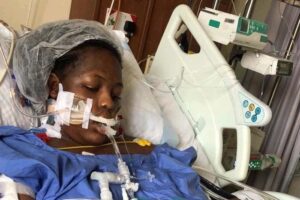
Gift had been fighting severe complications from an autoimmune disease, a condition in which the body’s immune system mistakenly attacks healthy tissues, leaving her and her family in constant distress.
Gift’s journey was one of hope, struggles, and a final push towards healing, but her life was tragically cut short just after the successful treatment she had received. The family had long been facing financial hardship, unable to afford the treatment she urgently needed, even though her condition was worsening. They were desperate, knowing that without immediate medical intervention, Gift’s life would continue to hang in the balance.
For months, her family tried every avenue to raise the necessary funds for her treatment. They faced many challenges, not only financial but also bureaucratic. Gift’s mother, Ketty Nimusiima, recalled how she had to face harsh words and rejection from several government officials when seeking assistance. Her heartbroken plea for help was met with indifference, and some ministers even insulted her when she came seeking assistance.
The family was on the verge of losing hope until they found a sympathetic ear in Ms. Jane Barekye, the State House Comptroller. Ms. Barekye helped them secure the vital funding from President Museveni, a move that brought much-needed hope to the family during their darkest hours. With the Shs 600 million donation, the family was able to take Gift to Kenya for urgent medical attention.
Upon reaching Nairobi, Gift underwent a thymectomy at Aga Khan Hospital. The procedure, which involves the removal of the thymus gland, is often performed on patients with autoimmune diseases like myasthenia gravis. This gland plays an important role in helping the immune system function properly by teaching it not to attack the body’s own tissues. In cases of autoimmune diseases, the thymus gland can contribute to disease activity, making it essential for patients to undergo this procedure to reduce symptoms and long-term medication needs.
Gift’s condition seemed to improve for a while after the surgery, and her family rejoiced, believing that their prayers had been answered. They held a thanksgiving service at All Saints Church in Mbarara to honor the president and the well-wishers who had contributed to Gift’s treatment. It was a moment of celebration and hope, as they believed she was on the road to recovery.
However, just days after returning to Uganda, Gift’s health took a tragic turn for the worse. Despite the surgery and her initial recovery, her condition began to deteriorate rapidly. The family rushed her to Mulago Hospital in Kampala, but it was too late. Gift passed away, leaving her family devastated and heartbroken.

The suddenness of her passing has left the family struggling to come to terms with their loss. They had invested all their hopes and resources into this last chance for her survival, but it was not to be. Ketty, Gift’s mother, said that she had finally felt a sense of peace after receiving the financial help from President Museveni. The funds had allowed her daughter to receive the treatment she desperately needed, but unfortunately, it could not prevent her untimely death.
As the family prepares for Gift’s funeral, there is a profound sense of loss and grief. Despite the efforts of so many, including President Museveni and the well-wishers who contributed to her treatment, the battle was ultimately lost. Gift was not just a patient; she was a daughter, a sister, and a friend. Her death has left a void in the hearts of all who knew her.
In the midst of this tragedy, Gift’s family is grateful for the support they received during her final months. They are particularly thankful for the assistance from Ms. Jane Barekye and President Museveni, who did everything in their power to ensure Gift could get the medical attention she so desperately needed. Though the outcome was not what they had hoped for, the family remains appreciative of the help they received.
The pain of losing a loved one is always profound, but the added layer of knowing that every possible effort was made to save her life makes the loss even more difficult to bear. Gift’s passing has sparked a conversation about the state of healthcare in Uganda, particularly when it comes to life-saving treatments for patients with serious medical conditions.
In Gift’s case, the bureaucratic hurdles she and her family faced, along with the financial challenges of affording treatment abroad, highlight the struggles many Ugandans face when dealing with serious health issues. The fact that Gift’s family had to rely on the generosity of the president to fund her treatment is a stark reminder of the gaps in the country’s healthcare system.
This tragedy has also drawn attention to the importance of timely and accessible medical care for all Ugandans, especially those suffering from rare or complicated medical conditions. Gift’s death should serve as a call to action for both the government and the public to work together to improve healthcare services, making them more affordable and accessible to those in need.

As her family mourns, they find solace in the fact that Gift’s story is one of courage, love, and hope. Despite the sorrow of her untimely death, they are proud of the fight she put up and the love and support they received along the way. Gift’s legacy will live on in the hearts of those who knew her, and her story will continue to inspire others who face similar struggles.
In the end, while the outcome was tragic, the love and care that Gift received from her family and the kindness shown by those who helped her will always be remembered. Her death is a loss not only for her family but for the entire community that watched her battle her illness with strength and grace.
Gift Ainembabazi’s death has left her family shattered. She was a symbol of hope, having fought against the odds, but in the end, she could not win the battle against her autoimmune disease. Though the family had received crucial financial help from President Museveni, it was not enough to save her.
Her journey began with the painful struggle to raise money for treatment. She was suffering from a severe autoimmune disease, and without surgery, her health was deteriorating quickly. Her family turned to several government offices for help, but their requests were ignored, and in some cases, they were met with disrespect.
It was only after they sought help from Ms. Jane Barekye that things started to change. She assisted them in securing the funds needed for Gift’s treatment in Kenya. The surgery went well, but her health began to decline after she returned home. The family was devastated when they realized that no matter how hard they fought, the disease had taken too much of a toll.
Gift Ainembabazi was a young woman full of potential, but her life was tragically cut short after a long and painful battle with an autoimmune disease. Despite the efforts of her family, President Museveni, and medical professionals, the disease ultimately claimed her life, leaving her family to grapple with the grief of losing someone so young and full of promise.
Her death serves as a reminder of the importance of healthcare accessibility and the need for ongoing support for families dealing with serious health conditions. The tragedy also highlights the crucial role that community and government support can play in helping those in need. However, it is a bittersweet reality that, despite all the help, Gift’s story ended in heartache.