Related Articles
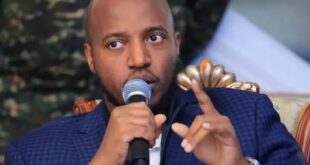


In a dramatic turn of events, former Uganda Prisons Service (UPS) officer Lawrence Ampe has raised concerns about his safety after being dismissed from his position earlier this week. The dismissal, which came after Ampe openly supported National Unity Platform (NUP) presidential candidate Robert Kyagulanyi Ssentamu, popularly known as Bobi Wine, has escalated into an alarming situation where the former officer claims his life is in danger.

Ampe was dismissed from the Uganda Prisons Service for engaging in partisan politics, a violation of the UPS’s regulations. It was revealed that the former officer had been using his social media platforms to advocate for the NUP and criticize government practices, including alleged corruption and the mistreatment of lower-ranking officers. These actions were deemed unacceptable by his employers, resulting in his immediate removal from the service.
After being dismissed, Ampe did not remain silent about his concerns. In a series of posts on X (formerly Twitter), Ampe expressed his growing fear for his personal safety. “As a result of my recent dismissal from the Uganda Prisons Service for speaking out against corruption and human rights abuses, my life is at risk,” Ampe wrote, highlighting his worries of potential abduction or worse. He went on to call for urgent support to protect him from what he perceives as threats from powerful forces within the government.
Ampe’s political activities had already been a source of tension within the Uganda Prisons Service. His vocal support for Bobi Wine and his criticisms of the current government were seen as breaches of the UPS code of conduct, which forbids officers from engaging in political activism while in uniform. Ampe’s dismissal came as no surprise to many, given the increasing tension between state institutions and those perceived to be sympathetic to the opposition.
In his posts, Ampe made it clear that he was not just speaking out about his personal ordeal. He also publicly endorsed NUP’s “Break the Silence” weekly campaign. This initiative, aimed at promoting accountability and fighting for a change in the political landscape of Uganda, resonated deeply with Ampe. He believed that it was time for Ugandans to stand up for justice, equality, and freedom, values he felt were being stifled by the current regime.
The “Break the Silence” campaign has become a symbol of defiance against what many perceive as the oppressive nature of Uganda’s government. It calls for citizens, especially those who have suffered injustices, to speak out and demand a better future. Ampe’s endorsement of this movement has made him an even more prominent figure within the opposition, but it has also placed him squarely at odds with the authorities.
While Ampe’s security concerns have captured public attention, the Uganda Prisons Service has yet to provide an official response to his claims. As of now, there has been no official statement addressing his fears or outlining any measures to ensure his protection. The delay in response from the authorities has only fueled Ampe’s belief that he is being left vulnerable.
Ampe’s plight is not an isolated case. In recent years, there has been an increasing number of Ugandans, particularly those in public service, who have faced similar threats and intimidation for voicing dissent. The growing crackdown on opposition supporters, especially as Uganda prepares for the 2026 general elections, has led to fears that those who challenge the government may be silenced through force or fear.

The dismissal of officers like Ampe has raised questions about the extent to which the government is willing to go to maintain control and suppress dissent. It has also highlighted the challenges faced by individuals who want to engage in politics and fight for change while working within state institutions. For Ampe, his personal safety now hinges on whether the government will respect his rights as a citizen or whether he will become another victim of political persecution.
Ampe’s story also sheds light on the broader political climate in Uganda, where the lines between government institutions and political allegiance have become increasingly blurred. In many cases, those who choose to support opposition movements or speak out against corruption are seen as enemies of the state, and their livelihoods are often threatened.
The situation is further complicated by the upcoming 2026 elections, which are expected to be fiercely contested. As opposition movements like NUP gain more ground, there is a growing sense of unease among government officials and security agencies. The fear is that such campaigns could incite unrest, especially if the government feels that it is losing control of the narrative.
Ampe’s case has also sparked a larger conversation about freedom of speech and the right to participate in political discourse. Many believe that Ugandans should be free to express their opinions without fear of retaliation, regardless of their position within the government or security forces. This principle of free expression is enshrined in the country’s constitution, yet it is often violated by those in power who seek to maintain a firm grip on the political landscape.
As Ampe continues to speak out about his experiences, he has gained support from various human rights organizations, opposition groups, and ordinary citizens who see his struggle as a reflection of the larger fight for democracy and justice in Uganda. His courage to stand up against perceived injustices has made him a symbol of resistance for many.
In the wake of Ampe’s statements, there have been calls for the government to guarantee the safety of all citizens, especially those who choose to speak out against corruption and human rights abuses. These calls have grown louder as more individuals, particularly in the security forces, find themselves caught between their professional duties and their political beliefs.

While the government has yet to respond directly to Ampe’s allegations, his case has become a focal point for those who believe that Uganda is heading in a dangerous direction. The crackdown on dissent and political opposition, as seen in Ampe’s dismissal, has led many to fear that the country’s democratic space is shrinking.
As Ampe’s life remains under threat, his call for safety serves as a reminder of the harsh realities faced by those who dare to challenge authority in Uganda. Whether his fears will be realized or whether his voice will continue to be heard will depend on how the situation unfolds in the coming days and weeks.
For now, Ampe’s story stands as a cautionary tale for all those who seek to speak out against the government. It is a reminder that in Uganda, freedom of expression and political participation can come at a high price, especially for those who choose to align themselves with the opposition.
As Uganda prepares for the 2026 elections, the stakes are high. The political environment is becoming more charged, and the risks for opposition supporters, like Ampe, are growing. Whether the government will choose to silence those who speak out, or whether it will respect their right to participate in political discourse, remains to be seen.
For Lawrence Ampe, the coming months will be critical. His survival and ability to continue his activism depend on the support he receives from the international community, human rights organizations, and fellow Ugandans who believe in the importance of standing up for justice and freedom. His courage may inspire others to follow in his footsteps, but it may also place him at even greater risk.
The story of Lawrence Ampe is not just about one man’s struggle for safety; it is about the broader fight for human rights, political freedom, and accountability in Uganda. As the country moves toward the 2026 elections, it is clear that the battle for a more just and democratic society is far from over.
Ampe’s voice, however, will continue to resonate as a beacon for those who believe in a better future for Uganda, one that is built on truth, transparency, and respect for human rights.