Related Articles

In a statement that has sparked intense national debate, the government of Uganda has made it clear that opposition leader Dr. Col. Kizza Besigye will not be released from custody until his treason trial is concluded. The announcement was made during a press briefing held on December 19, 2025, in Rukungiri District, the hometown of Dr. Besigye, by the Deputy Speaker of Parliament, Thomas Tayebwa. Representing President Yoweri Museveni, Tayebwa emphasized that the case against Dr. Besigye, a longtime critic of the government, must proceed through the courts as per due process.
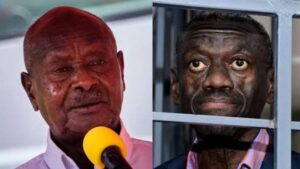
The decision to detain Dr. Besigye until the conclusion of his trial has been met with strong reactions from various sectors of the Ugandan public. There have been growing concerns, particularly from residents of Rukungiri, who believe the detention is politically motivated. Dr. Besigye’s supporters accuse the government of using the legal system as a tool to suppress opposition and deny the veteran politician his right to fair legal proceedings. However, the government has consistently defended its stance, saying that the matter is legal, not personal.
The press briefing in Rukungiri, attended by several prominent government officials, including Minister for Security, Rt. Maj. Gen. Jim Muhwezi, Minister for ICT and National Guidance, Dr. Chris Baryomunsi, and National Resistance Movement (NRM) flag bearers, sought to clarify the government’s position. Tayebwa’s statement directly addressed the ongoing controversy and sought to assure the public that the government was acting in accordance with the law.
Tayebwa stressed that the reason for the prolonged detention of Dr. Besigye and his co-accused, Obeid Lutale, was not due to any fault on the part of the state, but rather because of delays in the legal process. According to Tayebwa, the prosecution has prepared its evidence and is ready to proceed with the trial. He further emphasized that the delay in bringing the accused to court was not the government’s fault, but that of the accused and their legal teams.
“The government is ready with its evidence. What we are asking for is a speedy trial so that the truth can be presented openly before court,” Tayebwa said. His remarks reflected the government’s position that the court proceedings should be allowed to proceed without further hindrance. Tayebwa also questioned why the accused were allegedly unwilling to appear in court, implying that their reluctance was contributing to the delays.
Tayebwa went on to dismiss claims that the government’s actions were driven by personal animosity between President Museveni and Dr. Besigye. According to him, the case was purely a legal matter, and it was the court’s responsibility to determine the guilt or innocence of the accused. He stated, “There is no personal grudge. The arrest was based on alleged crimes, and only a court of law can determine guilt or innocence.”
The Deputy Speaker’s statement was a direct response to growing public pressure, with many calling for Dr. Besigye’s release. Supporters of Dr. Besigye, particularly from his home district of Rukungiri, have been vocal in accusing the government of politically targeting the opposition leader. They argue that his prolonged detention is an effort to silence a key figure in Uganda’s political opposition.

While Tayebwa emphasized the government’s commitment to following due process, the issue of political persecution remains a sensitive topic. For many, the detention of Dr. Besigye is seen as a clear example of the government’s attempts to neutralize dissent and stifle political opposition. Dr. Besigye, who has run for president multiple times, is one of the most prominent opposition figures in Uganda and has long been at odds with President Museveni.
The Minister for ICT and National Guidance, Dr. Chris Baryomunsi, further reinforced the position of the government during the press briefing. He reiterated that the judiciary is an independent arm of government, and the executive branch, including President Museveni, has no power to release individuals whose cases are still pending in court. According to Dr. Baryomunsi, those calling for Dr. Besigye’s release should understand that it is the court, not the President, that holds the authority to make such a decision.
“There is no constitutional authority for President Museveni to release an accused person whose case is still before the court,” Dr. Baryomunsi stated. His remarks were aimed at dispelling any notion that the government could intervene in the judicial process for political reasons. He emphasized that the separation of powers between the branches of government must be respected.
The issue of Dr. Besigye’s detention has also brought attention to the broader debate about political freedoms in Uganda. Critics of the government have pointed out that the opposition leader’s continued detention is a sign of increasing political repression in the country. They argue that the government is using the legal system to punish political opponents rather than to administer justice.
On the other hand, government officials insist that the case against Dr. Besigye is legitimate and that it is being handled according to the law. Minister for Security, Rt. Maj. Gen. (Rtd) Jim Muhwezi, who was also present at the press briefing, revealed that he had previously appealed to President Museveni to consider releasing Dr. Besigye. However, Muhwezi pointed out that the delays in the trial had largely been caused by the defense team, which has reportedly not been keen on proceeding with the case.
“If the trial proceeds quickly and the court reaches a conclusion, I will again appeal to the President. But as long as the matter is still before court, the President cannot intervene,” Muhwezi explained. His statement highlighted the tension between the desire for a swift resolution and the legal complexities that have slowed down the trial process.
Dr. Besigye’s trial has become a flashpoint for political tensions in Uganda, with many questioning whether the delays are part of a broader strategy by the government to keep the opposition leader out of the public eye. The charges of treason, which stem from alleged plots to overthrow the government, have only added to the political drama surrounding the case.

Supporters of Dr. Besigye maintain that the charges against him are politically motivated and that the government is trying to undermine his efforts to challenge President Museveni’s long-standing rule.
They argue that the trial is just another attempt by the government to silence a prominent opposition figure who has long been an outspoken critic of the regime.
As the trial continues, the issue of political persecution remains at the forefront of the debate. While the government insists that the case is based on legal grounds, many believe that it is part of a larger pattern of silencing dissent and preventing any serious challenge to President Museveni’s rule. The eyes of the nation, and indeed the international community, remain firmly fixed on the proceedings as they unfold.
With Dr. Besigye’s detention likely to remain a key issue in Uganda’s political discourse, it remains to be seen whether the trial will finally bring closure to this contentious chapter in the country’s political history. Until then, the debate over justice, political freedom, and the independence of the judiciary will continue to shape public opinion in Uganda.
As the government calls for a speedy trial, the question remains: will Ugandans accept the legal process as fair, or will they continue to view the detention of Dr. Besigye as part of a broader effort to suppress political opposition? Time will tell.
The trial of Dr. Besigye has also attracted attention from the international community, with various human rights organizations and foreign governments closely monitoring the situation. Critics argue that the continued detention of a prominent opposition leader undermines the principles of democracy and freedom of expression in Uganda. These international voices have raised concerns about the fairness of the legal process, given the long delays in the trial and the high political stakes involved. Some have called on the Ugandan government to ensure that Dr. Besigye’s case is handled transparently and impartially, free from political interference.
Despite the government’s assertions that the matter is purely legal, the ongoing saga has intensified political polarization within Uganda. For many, Dr. Besigye’s trial has become a symbol of the broader struggles for political freedom and justice in the country.
As public protests and calls for reform continue to grow, the government faces increasing pressure to either expedite the trial or release the opposition leader. How the government handles this case may have lasting implications for Uganda’s political landscape, affecting both domestic and international perceptions of its commitment to democracy and human rights.