Related Articles


BY RICHARD DRASIMAKU
MONDAY, OCTOBER 6, 2025
When Gladys Ondoru’s husband succumbed to diabetes and high blood pressure in 2016, she waded into the unchartered waters of life as a widow where complications abound.
A mother of six, Ondoru was the last of the three wives married to the deceased (whom she has declined to identify for this story out of respect for the departed soul).
She responded to fate following the tragedy of the loss of a dear husband and family head by assuming the responsibility to lead the family to ensure that the property left behind by their late husband was not grabbed by unscrupulous in-laws.
In total the women had 14 orphans to take care of-four children to the first wife, three to the second wife and six to Ondoru the third wife.
At the time of the burial which was held in their village home in Terego district, the clansmen falsely accused Ondoru of “killing” her husband.
But in reality that lie was concocted as part of a larger maneuver to subdue Ondoru so that she would accept to be inherited together with the family property by one of her in-laws.
Widow inheritance as well as inheritance of the property of the deceased is a common practice entrenched in the West Nile sub-region of Uganda.
However gender activists say widow inheritance and the accompanying practice of inheritance of the property of the deceased is a degrading and demeaning custom which exposes women and children to exploitation and abuse of rights.
At the clan evaluation meeting of their husband’s funeral, one of the brothers to the deceased rose up, and after gazing a fierce stare at the widows to supposedly convey his authority, declared that he was in-charge of his late brother’s belongings including the women and land in Oli Division in Arua City.
No sooner had he sat down than another brother rose up in opposition, asserting that the property in down-town Arua was for the orphans and he accordingly presented himself as the best inheritor to look after the orphans.
Then a general question was posed to Ondoru by the chairman of the clan. “Of these men seated here, who do you choose to be your next husband? He asked in deep coarse voice, chuckling saliva as he waited for answer.
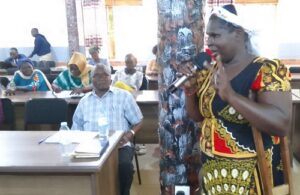
Ondoru felt stunned but not overly surprised since she is aware of this backward cultural norm. “I rose up and showed the cross of Jesus and told them that from now until death, Jesus will be my husband and that the property in town shall be administered by the widows for the benefit of the orphans.”
That declaration shut the mouths of the jostling in-laws and after returning to Arua City, Ondoru took charge of the property and their late husband’s remittances which was shared among the widows and spent on paying school fees for the orphans.
She attributed her assertiveness to a sensitization about negative social norms that she received from the Community Empowerment for Rural Development (CEFORD).
Drama at daughter’s marriage
But that was not all, as the clansmen still had more slandering tricks in their arsenal to throw towards Ondoru leading to dramatic antics at her daughter’s wedding.
When her firstborn daughter was getting married, another cultural taboo was cited to try to humiliate Ondoru at the wedding ceremony.
“The Lugbara say that only men are allowed to hold the hand of the bride to give to the bridegroom,” she recalls of the exchanges.
Ondoru said she surrendered the bride price to the Clansmen to enjoy but when it came to the wedding time, she could not allow the handholding taboo to stand.
“We rose up together with my brother-in-law who had not taken any responsibility in the girl’s upbringing but was adamant to show off as the next of kin. So, I picked the microphone and declared that I will be the one to hold my daughter’s hand and give to the bridegroom,” she disclosed.
I am a responsible woman because of that lesson I learned from CEFORD,” she says
That sensitization was part of a program that preceded the Social Action Analysis in countering gender based violence in Arua City, Terego and Gulu district that is in its second year of implementation.
At least 57,000 people both natives and refugees are targeted for sensitization and behavioral transformation under this phase of the SAA in Uganda and Rwanda.
CEFORD in partnership with CARE international in Uganda and with funding from the Austrian Development Agency, launched the five year project in April 2024 and will run until 2029.
This was informed by an earlier research by Care International and CEFORD which found high prevalence of gender based violence and child abuse in former River Oli Division in Arua city, Omugo sub county and Omugo refugee settlement in Terego and Gulu city.
Physical violence tops the vice metrics according to the findings, followed by phycological violence, economic violence child marriage and sexual violence.
A further analysis found that Gulu City leads in physical violence standing at a staggering 58% followed by Arua City at 38%. The refugee community suffers more economic violence and child marriage than the host community and the urban residents.
The goal of SAA is therefore to empower marginalized women, girls and youths who are 15 years to 35 years old to be self-reliant and live in responsive and inclusive environments.
It is hoped that this would contribute to sustainable development goals I (no poverty), V (gender equality) and GAP III (the European Union Gender Action Plan to promote gender equality and women empowerment in it external engagements), Gilbert Alioni, the Gender Equality and Resilience Project Coordinator at CEFORD says.
He elaborated that through Social Action Analysis, they identify harmful social norms and influence institutional reforms for improved service delivery to vulnerable groups such as survivors of GBV and persons with disabilities.
How SAA works
Jessica Ajio, a Social Action analyst and member of Mandanyazu group in Pangisa ward says that in their analytical village groups, SAA members sit for roundtable discussions.
They identify social norms and practices that suppress women, girls, youths and PWDs and record testimonies from survivors of GBV, share experiences of overcoming them.
The group members deliberate on how those practices are derailing societal growth and propose remedies to inform local leaders. The recommendations are communicated o CEFORD for wider dissemination.
“We want to see that women and girls have increased voice and leadership to influence decisions and effectively take action to address their priorities,”Ajio said.
One such women who has passed through GBV and emerged as a champion is Lillian Anite, a person with disabilities who went on to became a councilor and advocate for rights of women and vulnerable members of her society.
Anite was married to a polygamous family which eventually broke up after the fourth child. The man who actually was running away from family responsibilities claimed that he was tired of being with a woman who was always delivering through cesarean section, meanwhile Anite’s mother-in-law accused her of introducing disability in her family when the last born was delivered with deformity to the ear.
They despised her to the point that she had to shift her residence away from the family premises. However, staying true to her courageous attitude, Anite went on to become a councilor representing the PWDs in Oli Division council for 20 years and used her earnings to buy a plot of land and construct her own house and pay school fees for the children.
But after settling in her own house, Anite’s husband tried to sell the land after taking an advance payment of sh1m from a neighbuor. When she complained, the man fled to Jinja abandoning her and other wives with the children. It took a prolonged struggle to wade off the man from whom the advance money was picked.
“A woman with disability gives birth to a normal child. Also you must know that no one applies to be disabled,” she says.
Anite appealed to religious and cultural leaders to speak against GBV, preach compassion and harmony among families.
Ismail Tuku, the Prime Minister of the Lugbara Cultural Institution categorically denied that the cultural entity is tolerant to abuse of women and vulnerable people.
“Gender based violence against women and children is prevalent among the communities due to ignorance, alcoholism, and negative masculinity where men abdicate their roles to overburden women,” he said and added that people use culture and religion as excuse to cover up their failures.
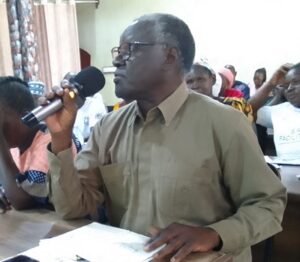
Tuku noted that whereas alternative dispute resolution among communities is one of the cardinal roles of the traditional cultural leaders, undertaking such actions in the urban settings is complicated due to the cosmopolitan nature of the settlements.
He said when a woman is married off to a bridegroom, that man is required by custom to show the woman the land she should dig and she holds that land in trust for her children to inherit in the future.
“We discourage selling of land except under three circumstances- when there is a complicated sickness that requires referral for instance outside of the country, for school fees to support children’s education or to support the mother to look after the children when the husband is imprisoned long-term.”
Tuku made it categorically clear that the archaic practice of paying bondage-price (Aru-ba) is one of the myths similar to the stopping of women from eating gizzard by gluttonous men who cite culture or religion to hide their mischief.
“Such things cannot affect you if you don’t believe in them, but it will affect you if you believe it and the cultural institution of Lugbara does not promote them,” said Tulu.
Job Richard Matua, an Assistant Resident City Commissioner for Arua held that the West Nile men were torturing women for no valid reason.
“The gene that determines whether a child conceived at a given time is a boy or a girl comes from the man, not the woman. So, don’t torture spouses on account of ignorance because a woman’s ovary only has one type of gene,” he said.
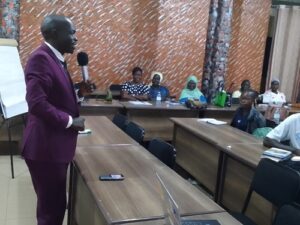
He added that in the olden days, boys were preferred to girls because there was rampant inter-clan fighting and people looked at boys as soldiers for security.
“Now the responsibility of security rest with the State of Uganda and we are living in peace. Stop beating the backs of women for producing girls,” said Matua who encouraged families to attack equal value to both girls and boys and accord them equal opportunities of education, health and family property.